Background art on Radio Cutman
Marvel vs. Capcom: Clash of Super Heroes background artists
Marvel vs. Capcom: Clash of Super Heroes is Capcom's 1998 CPS-2 arcade crossover fighting game, the third Marvel vs. Capcom installment.
Background credits
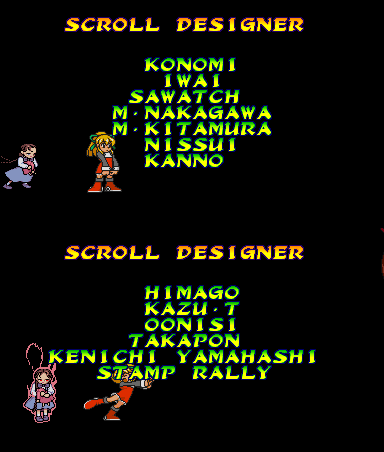
- Scroll Designer
- KONOMIIWAISAWATCHM·NAKAGAWAM·KITAMURANISSUIKANNOHIMAGOKAZU·TOONISITAKAPONKENICHI YAMAHASHISTAMP RALLY
Capcom's staff rolls credit background artists as scroll designers, after the scrolling background layers they drew.
Names as written in the game’s ending credits.
About the game
| Developer | Capcom |
|---|---|
| Publisher | Capcom |
| Series | Marvel vs. Capcom |
| Released | 1998 |
| Format | CPS-2 (arcade) |
| Region | Japan, North America |
| Also released on | Dreamcast, PlayStation, PlayStation 3, Xbox 360 |
| Available today |
|
| Stages on the stream | 11 |
Clash of Super Heroes opened the series up beyond Street Fighter, bringing in characters from many Capcom franchises, Mega Man among them, to fight Marvel's heroes and villains. It keeps the two-character tag teams of the earlier games but drops the Variable Assist for a guest system: each player is randomly given a partner character who can be called in a limited number of times. It also adds the Variable Cross, which lets both team members attack at once for a short time.
Game Machine listed it as Japan's second most successful arcade game of March 1998, and in the United States it sold an estimated 3,000 arcade units, reportedly outselling Street Fighter III. The 1999 Dreamcast port was praised and added a four-player mode, while the PlayStation version removed tag battles to fit the console's memory. It returned in Marvel vs. Capcom Origins in 2012 and in Marvel vs. Capcom Fighting Collection in 2024.
Source: Wikipedia
Availability checked November 2026.
Stages on the stream 11

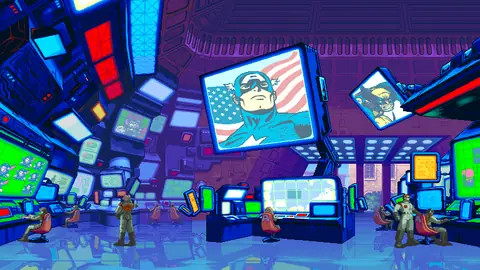


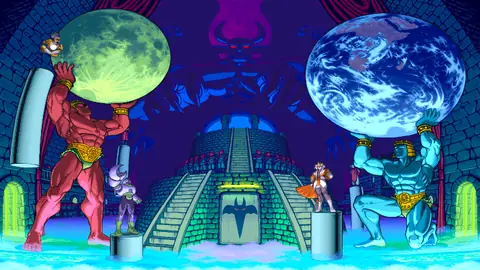



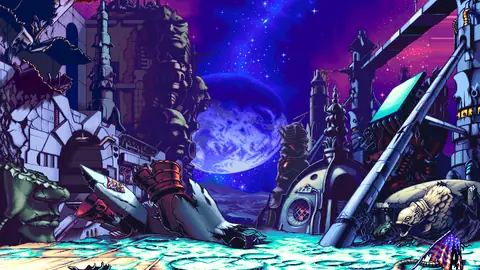


More from Marvel vs. Capcom



Hear it live
Stages like these rotate behind 24/7 lofi, chill beats and boom bap on Radio Cutman.
Marvel vs. Capcom: Clash of Super Heroes and its artwork are © Capcom. Credits are shown to recognize the artists who drew these backgrounds.